Why Collectors Are Coming Back To The Rolex Submariner 16610
For a long time, the Rolex Submariner 16610 sat in a slightly awkward place.
It was not old enough to be considered true vintage, not new enough to be the latest thing, and not rare enough to be treated like some obscure collector reference. It was, for many years, simply the Submariner. The obvious choice. The safe choice. The watch everyone knew and the watch I always loved.
And sometimes, watches like that get taken for granted.
But I think that is starting to change.
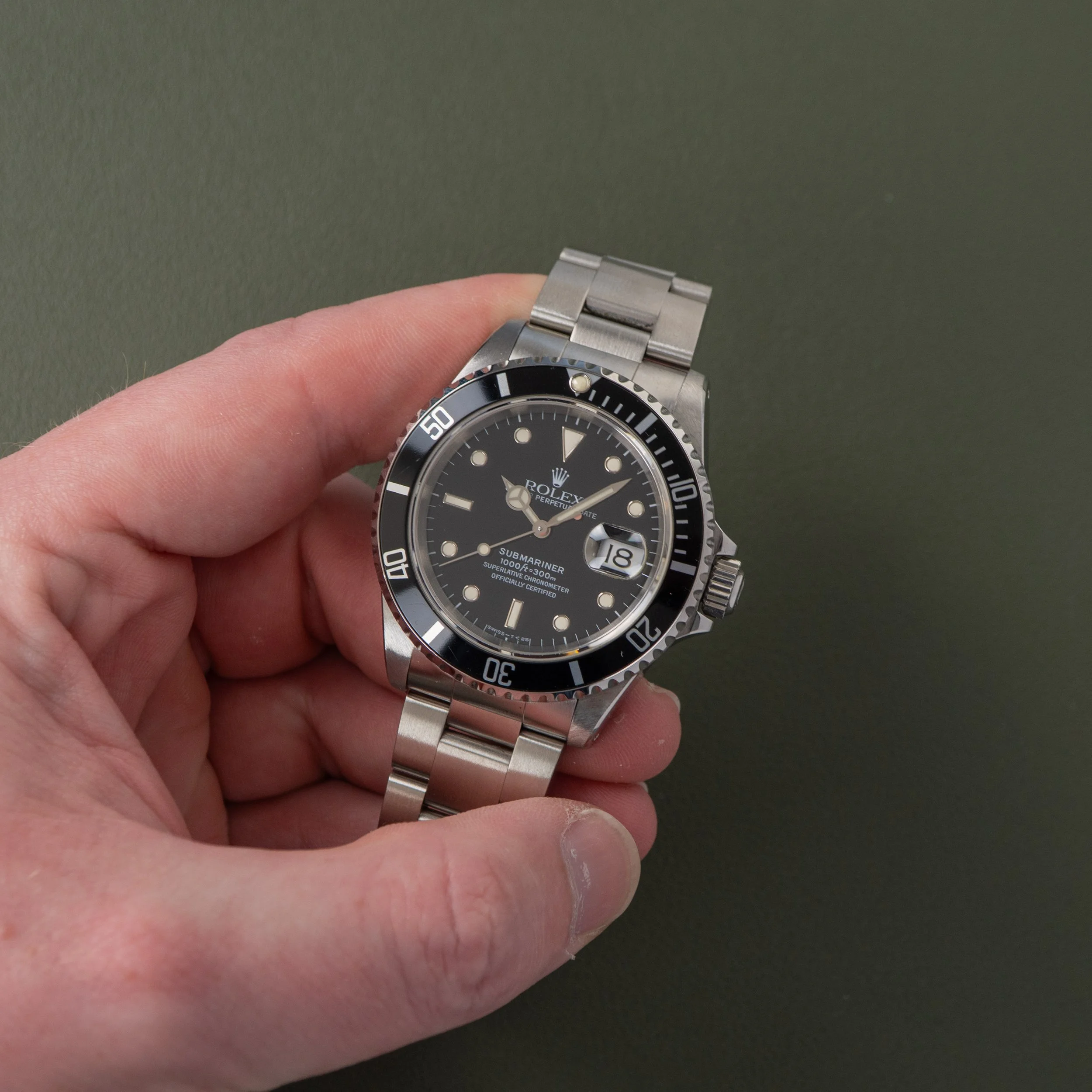
A wonderful sharp example that I curated for the online store. Image from Watts On Watches.
Collectors are coming back to the Rolex Submariner 16610 because it represents something that feels increasingly important in today’s watch market. It is modern enough to wear every day, but old enough to still carry that classic Rolex charm. It has the proportions, the aluminium bezel, the slimmer case profile and the understated feel that many collectors now miss in the modern ceramic era.
It is not rare in the conventional sense. In fact, in the Rolex endorsed Submariner reference book, it is stated that an estimated 646,613 examples of the Submariner 16610 were produced.
That is a big number.
But that is also where things get interesting. Because with a watch like this, rarity is not really about how many were made. It is about how many genuinely good ones remain.
What Is The Rolex Submariner 16610?
The Rolex Submariner 16610 is the classic stainless steel Submariner Date produced before the ceramic bezel generation.
It has a 40mm stainless steel case, black dial, date window, sapphire crystal, aluminium bezel insert and Rolex’s calibre 3135 automatic movement. On paper, it is exactly what most people imagine when they think of a Rolex Submariner.
And that is part of its strength.
It is not trying too hard. It does not need a wild dial colour, an anniversary nickname or artificial scarcity to make sense. It is simply a very well balanced Submariner from an era where Rolex still had one foot in the old world and one foot in the modern one.
That is the sweet spot.
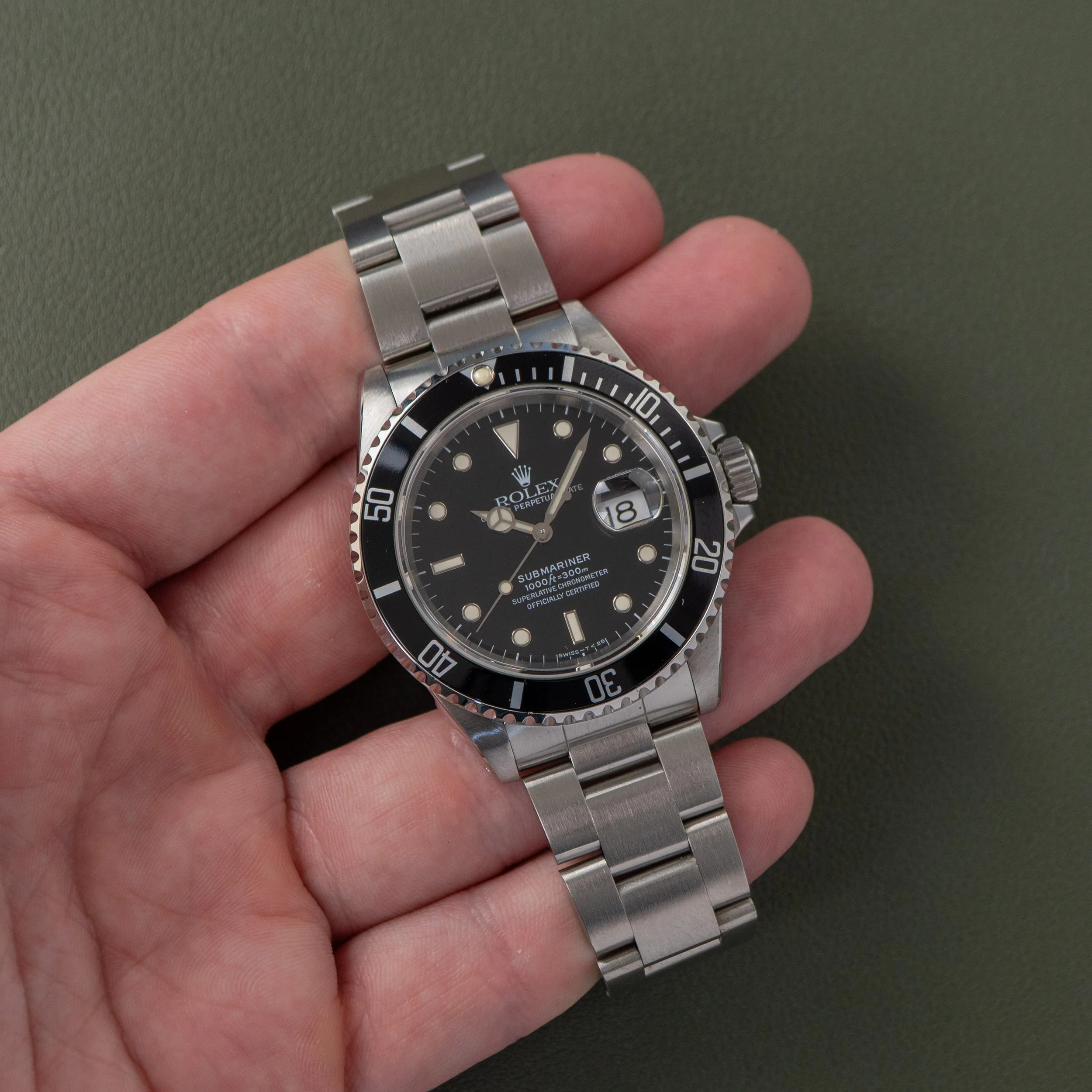
Image from Watts On Watches.
Why Was The 16610 Overlooked?
The 16610 was produced in large numbers. Dealers had them. Collectors saw them regularly. For years, it was not the watch people were shouting about.
The true vintage collectors were looking further back towards matte dials, gilt dials, meters first Submariners and early crown guard references. Modern buyers were chasing ceramic bezels, maxi dials, green Subs and whatever Rolex was currently making difficult to buy.
The 16610 sat in the middle.
Too modern for some vintage collectors.
Too old for some modern buyers.
Too common for the hype crowd.
But that middle ground is exactly why it now feels so appealing.
The market has matured. Collectors are becoming more thoughtful. People are looking beyond just what is currently hot and starting to appreciate watches that are genuinely good to own.
The 16610 is one of those watches.
The Last Of The Classic Submariner Feel
For me, one of the biggest appeals of the 16610 is the way it wears.
The modern ceramic Submariners are excellent watches. They are technically superior in many ways. The bracelets are better. The clasps are better. The ceramic bezels are more resistant to wear. There is no denying that.
But they feel different.
The 16610 still has that older Rolex feel. The case is slimmer. The lugs are more restrained. The aluminium bezel has warmth and character. The whole watch feels lighter, cleaner and slightly less polished in personality.
That is not a criticism of the modern Submariner. It is just a different experience. The 16610 feels like the last generation of the Submariner before everything became a little bigger, shinier and more controlled.
There is a charm to that.
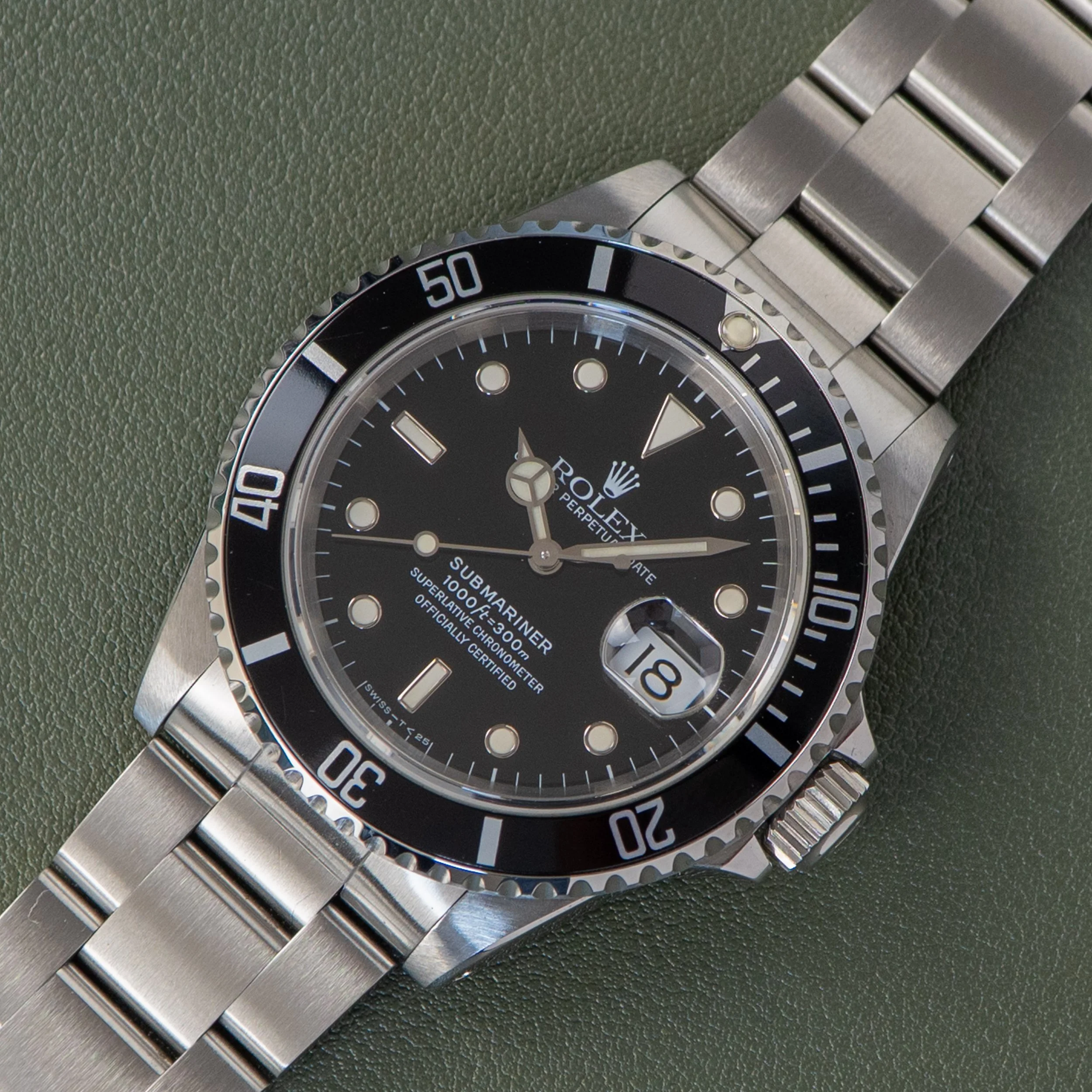
Image from Watts On Watches.
Modern Enough To Wear, Old Enough To Matter
This is where the 16610 really makes sense.
It is not a fragile vintage watch that you feel nervous wearing. It has a sapphire crystal, a robust automatic movement and proper daily usability. You can wear it with a suit, jeans, swim shorts or a t shirt and it never looks out of place.
At the same time, it still feels connected to the older Rolex world.
The aluminium bezel can fade. The case shape matters. Earlier examples can have tritium dials and drilled lugs. Bracelet condition varies. The difference between a sharp one and a tired one is massive.
That is what makes it interesting.
A current production Rolex is often judged by availability, retail price and secondary market premium. A 16610 is judged by condition, originality, case shape and the details that separate a genuinely strong example from an average one.
That is much more appealing to me.
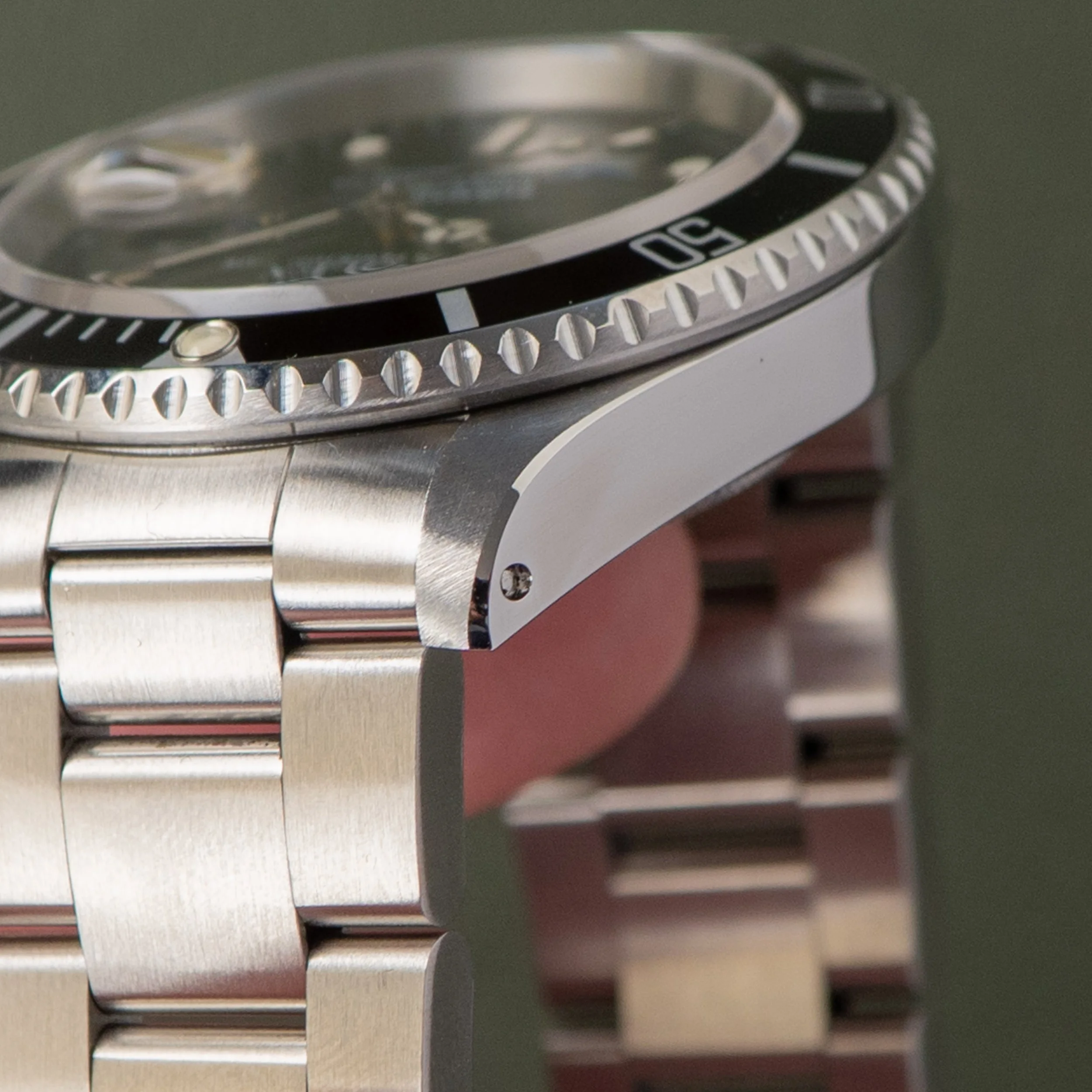
Drilled lugs. Image from Watts On Watches.
The Production Number Does Not Tell The Full Story
The estimated production figure of 646,613 examples tells us something important. The 16610 was not some tiny production oddity. It was a successful, widely produced Rolex sports watch. But collectors need to be careful with numbers.
High production does not mean every example is equal. This is very important with every watch.
Many have been polished badly. Many have had service parts fitted. Many have stretched bracelets. Many have tired cases, damaged inserts, replacement dials or hands, or simply decades of hard use behind them.
That is where the real collecting starts.
The question is not just, “How many did Rolex make?”
The better question is, “How many still exist in genuinely strong, correct, attractive condition?” That number is much smaller.
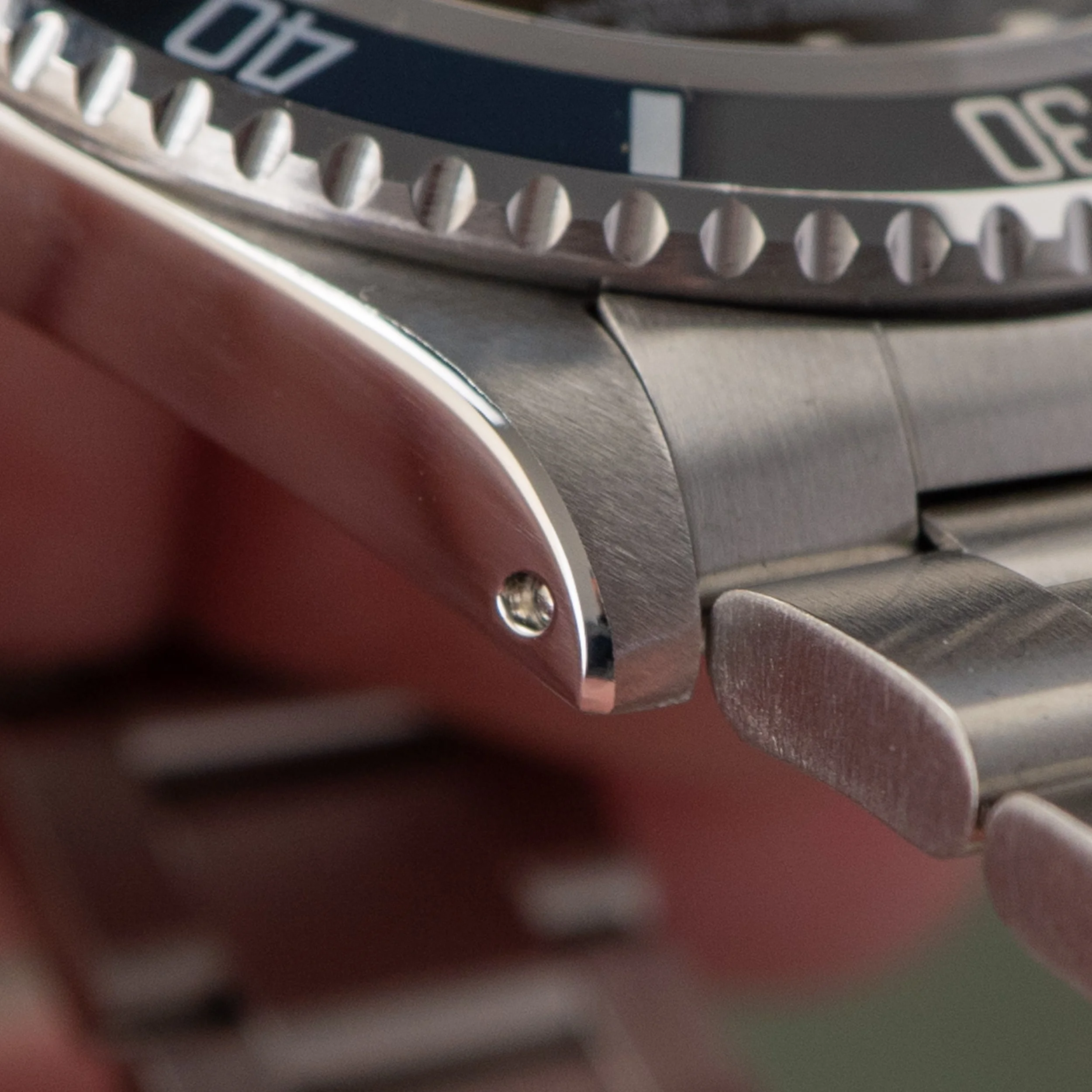
A prime example of good case condition. Image by Watts On Watches.
Condition Is Everything
With the 16610, condition is where the value sits. A poor 16610 is just another used Submariner. A sharp, honest, correct 16610 is a completely different proposition.
The case is one of the first things I look at. Are the lugs still full? Are the crown guards strong? Has the watch been polished sympathetically, or has it lost its original shape? A Submariner can still look shiny in photos and be completely wrong in the hand.
The bezel insert matters too. A good original aluminium insert adds a lot of character. Later service inserts are not automatically a disaster, but they do change the feel of the watch.
Then there is the dial and hands. Earlier tritium examples can be very attractive when the dial and hands have aged evenly. Later luminova examples offer more practical daily use and often feel slightly more modern.
Bracelet condition is another major factor. Stretch is common, especially on watches that have genuinely been worn for decades. Again, some wear is expected, but there is a big difference between honest use and a tired watch being dressed up as a collector grade example.
This is why I always come back to the same point.
Condition, condition, condition.
Earlier Versus Later Examples
One of the nice things about the 16610 is that different periods of production offer different personalities.
Earlier examples, especially those with tritium dials and drilled lugs, have more obvious neo vintage charm. They feel closer to the older Rolex world and can be very appealing to collectors who want a bit more character.
Later examples can feel cleaner and more practical. Solid end link bracelets, luminova dials and more modern finishing give them a slightly more robust daily wearing feel. Neither is automatically better.
It depends what you want from the watch.
If you want charm, warmth and a little more vintage DNA, an earlier example may be more appealing. If you want a Submariner you can wear regularly without overthinking it, a later example might make more sense.
As always, I would rather own a superb later example than a poor earlier one.
The reference matters, but condition matters more.
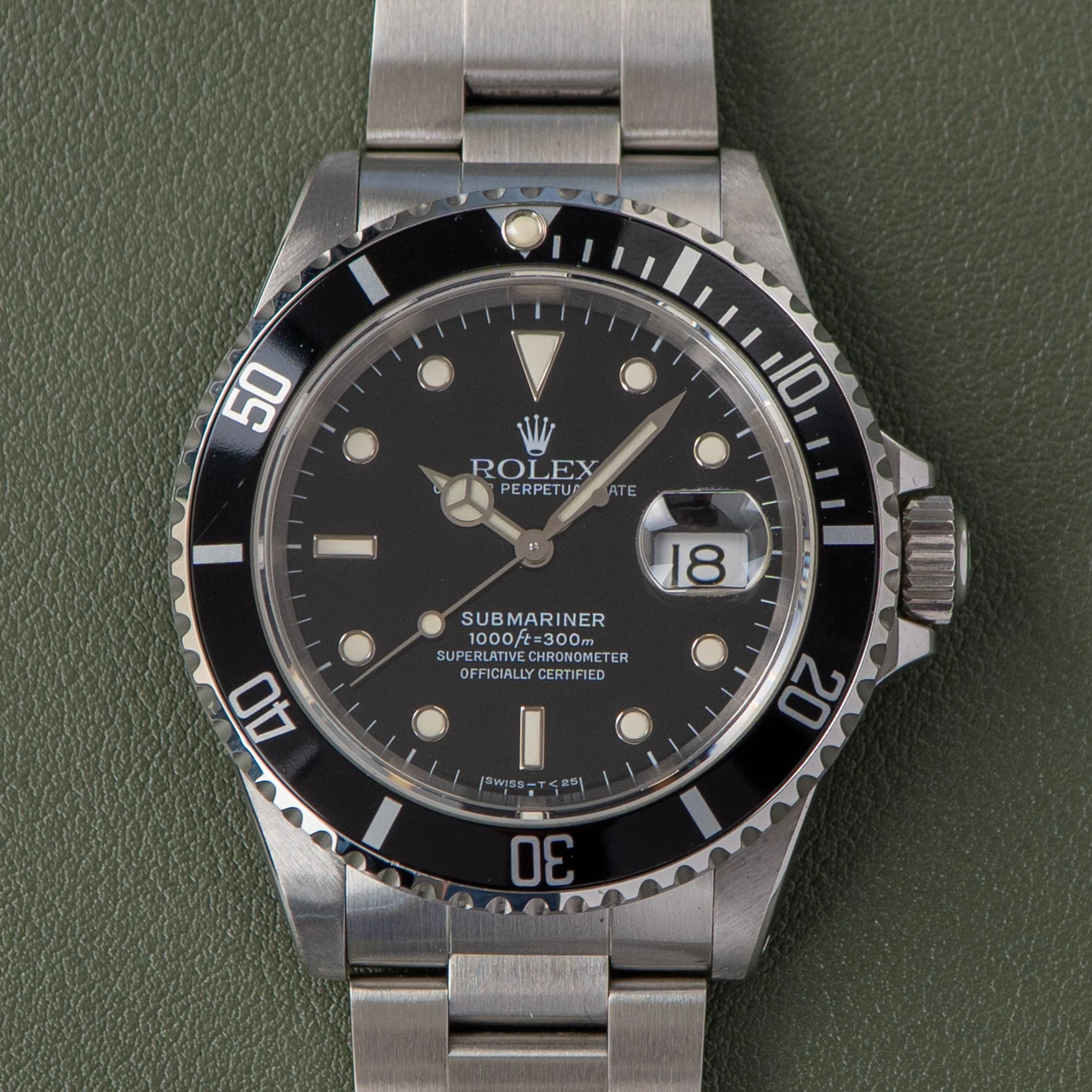
Original throughout. Original Tritium dial, handset and lume pip on the insert. Image from Watts On Watches.
Box And Papers Are Nice, But They Are Not Everything
With neo vintage Rolex, box and papers do matter. As I have said a million times, my approach is that box and papers are expected from the 90s and onwards. Anything before that should be treated differently and in my opinion box and papers do not matter for anything before 1990. As the 16610 hit the market in 1989, I would say box and papers are to be expected with this model. They help with provenance, they make the watch more complete, and they can make the piece easier to sell in the future.
But they do not turn a poor watch into a good one.
This is where buyers can get distracted. A tired, heavily polished 16610 with box and papers is still a tired, heavily polished 16610. A sharp, honest, correct example without papers can be a far better watch.
Of course, the perfect scenario is condition, originality and completeness. But if I had to choose, I would always start with the watch itself.
The watch is what you are wearing. The rest sits in a drawer.
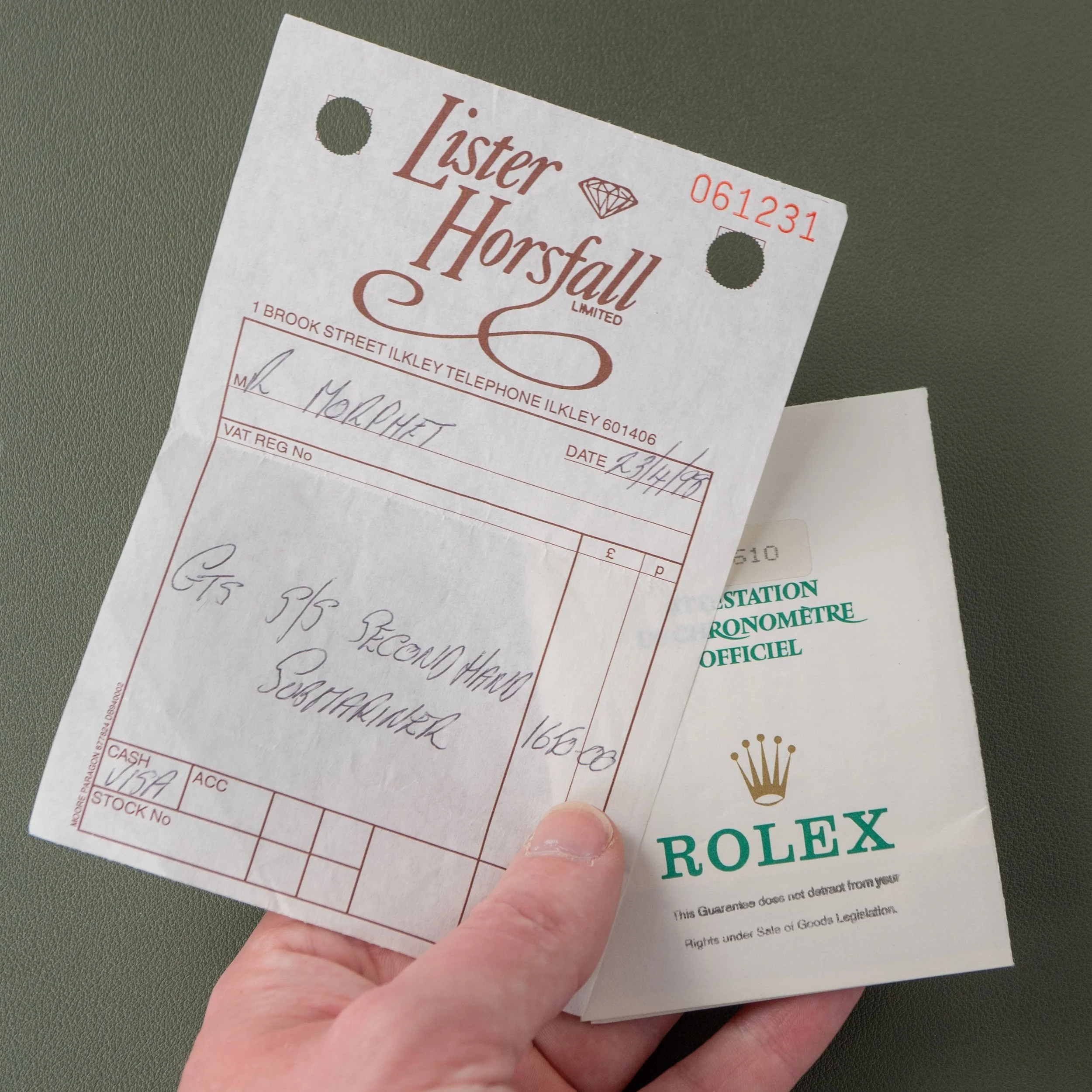
Paperwork is never more important than condition. Image from Watts On Watches.
Why Collectors Are Coming Back To It
I think collectors are returning to the 16610 because it feels honest. It is not wrapped in forced hype. It is not trying to be rare when it is not. It is not some modern release being chased purely because people think they can flip it.
It is simply a great Rolex Submariner.
And after years of hype, waiting lists, resale premiums and artificial scarcity, that feels refreshing.
The 16610 gives you the classic Submariner look without the heavier ceramic case. It gives you everyday reliability without losing old Rolex charm. It gives you collectability without becoming so precious that you are scared to wear it.
That balance is difficult to beat.
My Final Thoughts
The Rolex Submariner 16610 will never be the rarest Submariner. It was not made in tiny numbers, and it does not need to pretend otherwise.
But that was never really the point.
Its strength is that it might be one of the most complete Submariners Rolex ever made. Classic proportions, aluminium bezel charm, daily wear practicality, strong movement, recognisable design and just enough age to feel interesting. The market ignored it for a while because it was obvious.
Now collectors are starting to realise that obvious is not always a bad thing.
Sometimes, obvious just means the watch got it right.
By Thomas Watts.