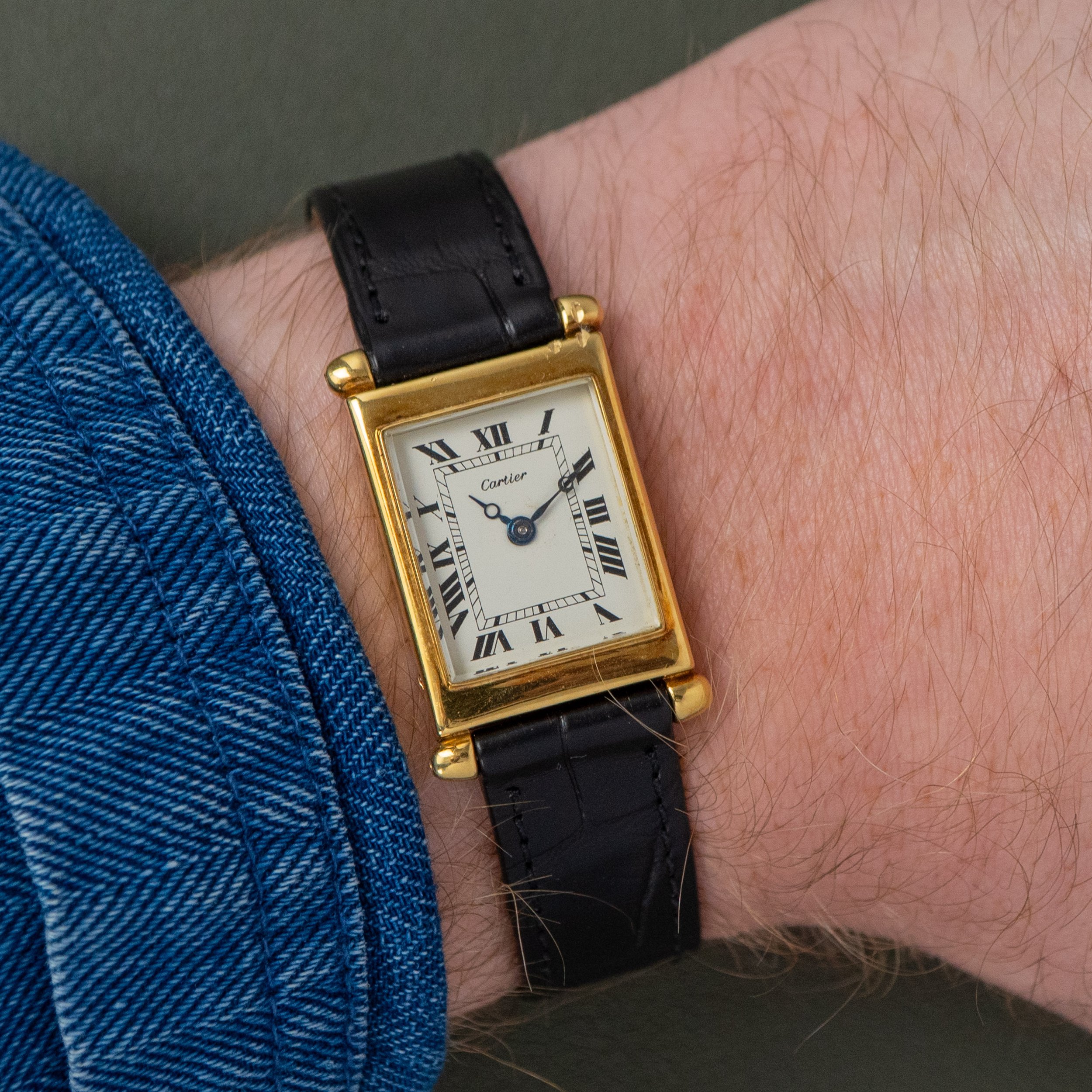
Auction results are rising, collector interest is growing and early Cartier designs like this Tank Obus are beginning to get the attention they deserve.
Over the last couple of years, the Cartier market has changed dramatically.
For a long time, vintage watch collectors tended to focus their attention elsewhere. Rolex sports models, early Patek Philippe, complicated dress watches from the traditional Swiss houses. Cartier was admired, of course, but often in a slightly different category. More design led. More style driven. More jewellery adjacent. That is no longer the case.
Over the last 12 months in particular, the auction market has made it very clear that collectors are now taking vintage Cartier extremely seriously. And rightly so.
Because when you really look at the brand’s history, its design language and the originality of its early wristwatches, it becomes obvious that Cartier was doing things that very few others were doing at the time.
This particular Tank Obus is a very good reminder of that.
The Auction Results Speak For Themselves
If you want evidence of how much Cartier has moved, you only need to look at what has happened at the major auction houses recently.
In April 2026, Sotheby’s sold an exceptionally rare Cartier London Crash in Hong Kong for HK$15.62 million. A month later, Christie’s sold another Cartier London Crash for CHF 1.585 million, around three times its low estimate. Then in September 2026, Sotheby’s pushed things even further when a unique white gold Cartier Cheich achieved HK$26.52 million, setting a new auction record for a Cartier wristwatch.
Now, of course, these are not everyday Cartier watches. These are rare, trophy level pieces. But they do show how seriously the brand is now being taken at the very top end of the market.
More importantly, the strength is not limited to the usual headline makers.
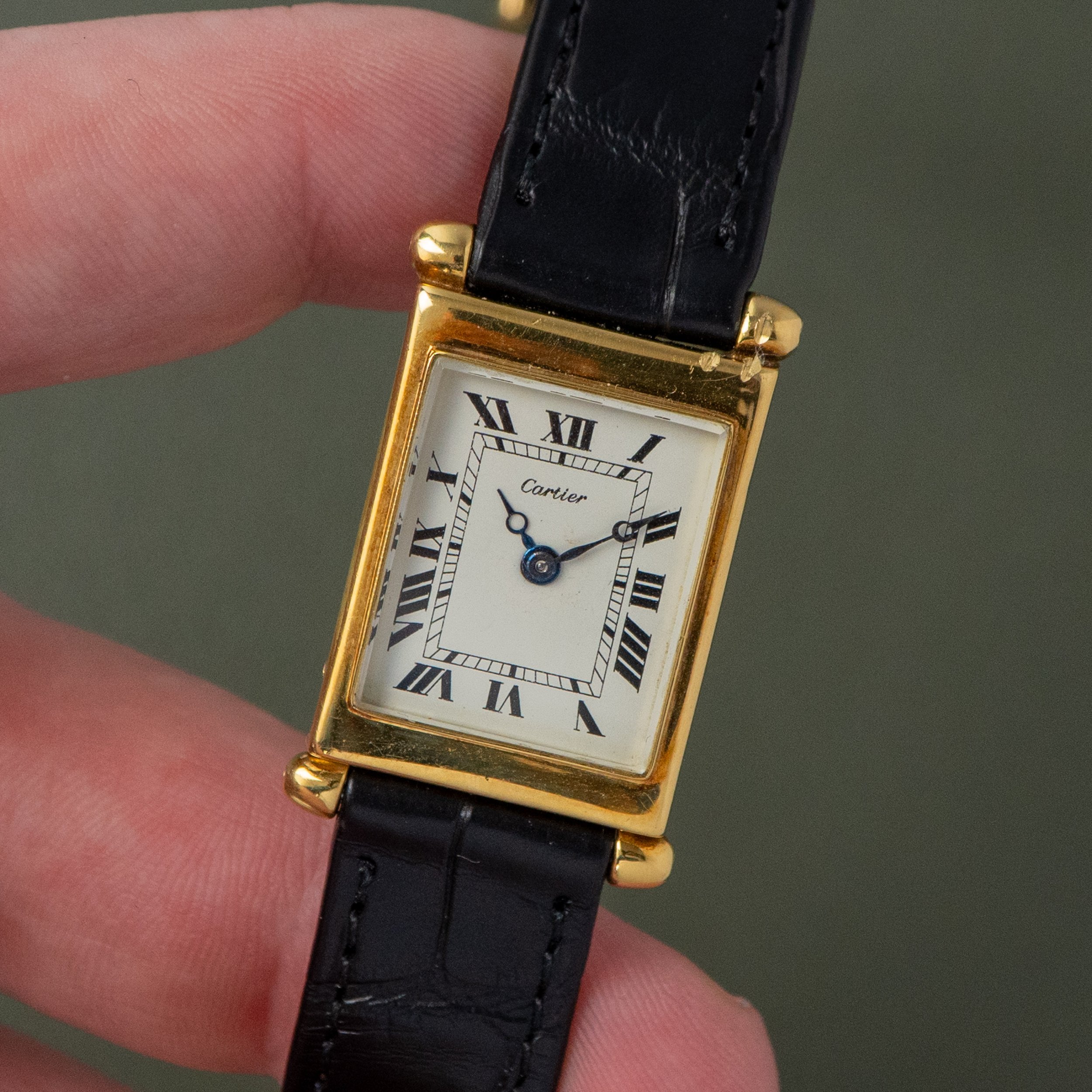
At Phillips in May 2026, a Cartier Tank Obus achieved HK$444,500 against an estimate of HK$100,000 to HK$200,000, more than doubling its high estimate. That is particularly interesting, because it shows that collectors are not just chasing the Crash. They are increasingly appreciating the wider Cartier design archive.
According to EveryWatch, Cartier’s auction sales value roughly doubled in the first half of 2026 compared with the same period the year before. That is a real shift.
Why Cartier?
For me, the answer is actually quite simple. Cartier was not thinking like most watchmakers.
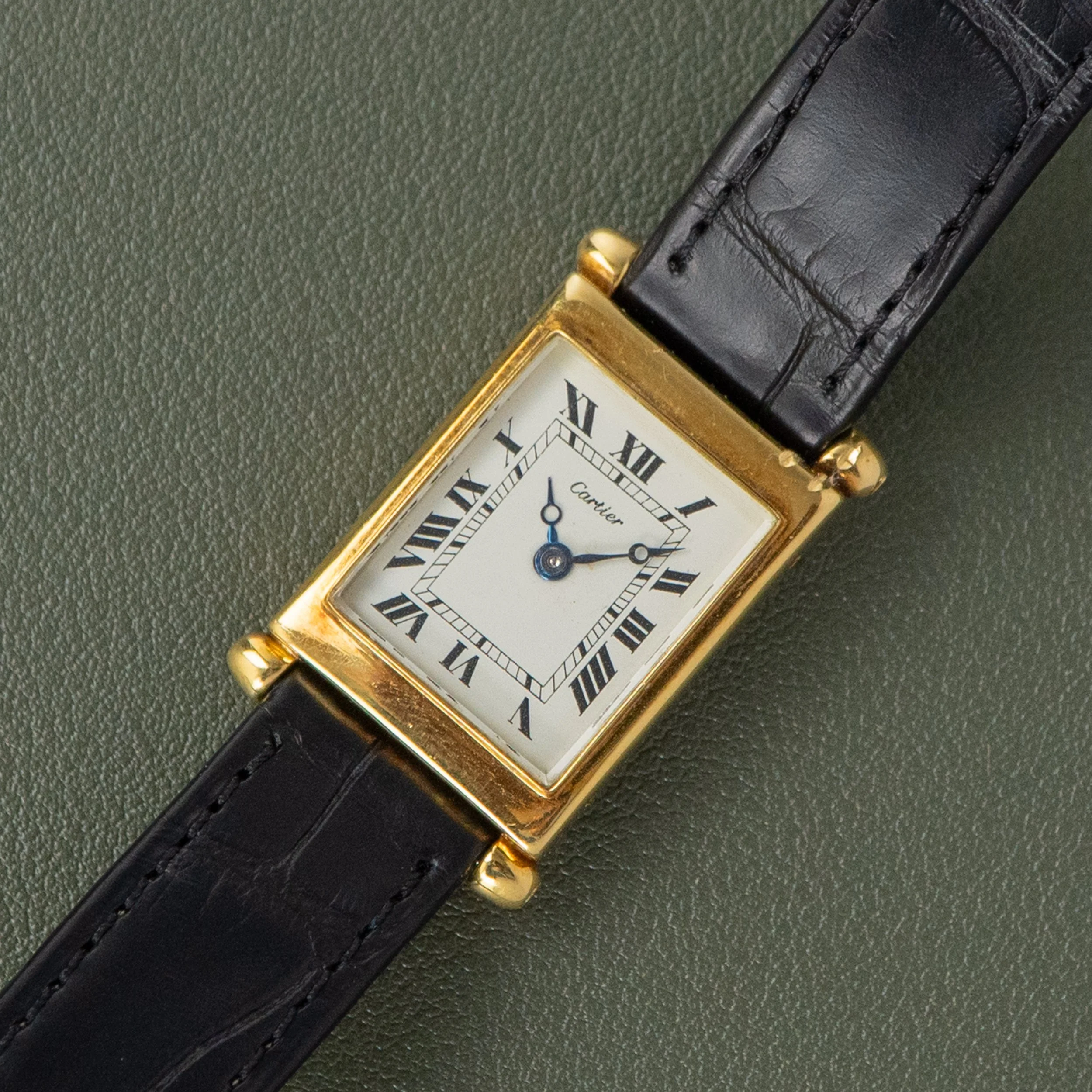
Where many brands approached the wristwatch primarily as a mechanical object, Cartier approached it as a design object. The case was not simply a container for the movement. It was the point. That is why so many Cartier designs remain so relevant today.
The Tank, Cintrée, Tonneau, Tortue, Chinoise, Crash, Obus. These are not just references. They are shapes and silhouettes that genuinely changed the way a wristwatch could look. I think that is what collectors are increasingly responding to.
There is also a growing appreciation for early Cartier as an area where scholarship, taste and individuality really matter. These are not watches bought purely because they are obvious. They are watches bought because the collector understands what they are looking at.
That is where this Tank Obus becomes particularly interesting.
Why This Tank Obus Matters
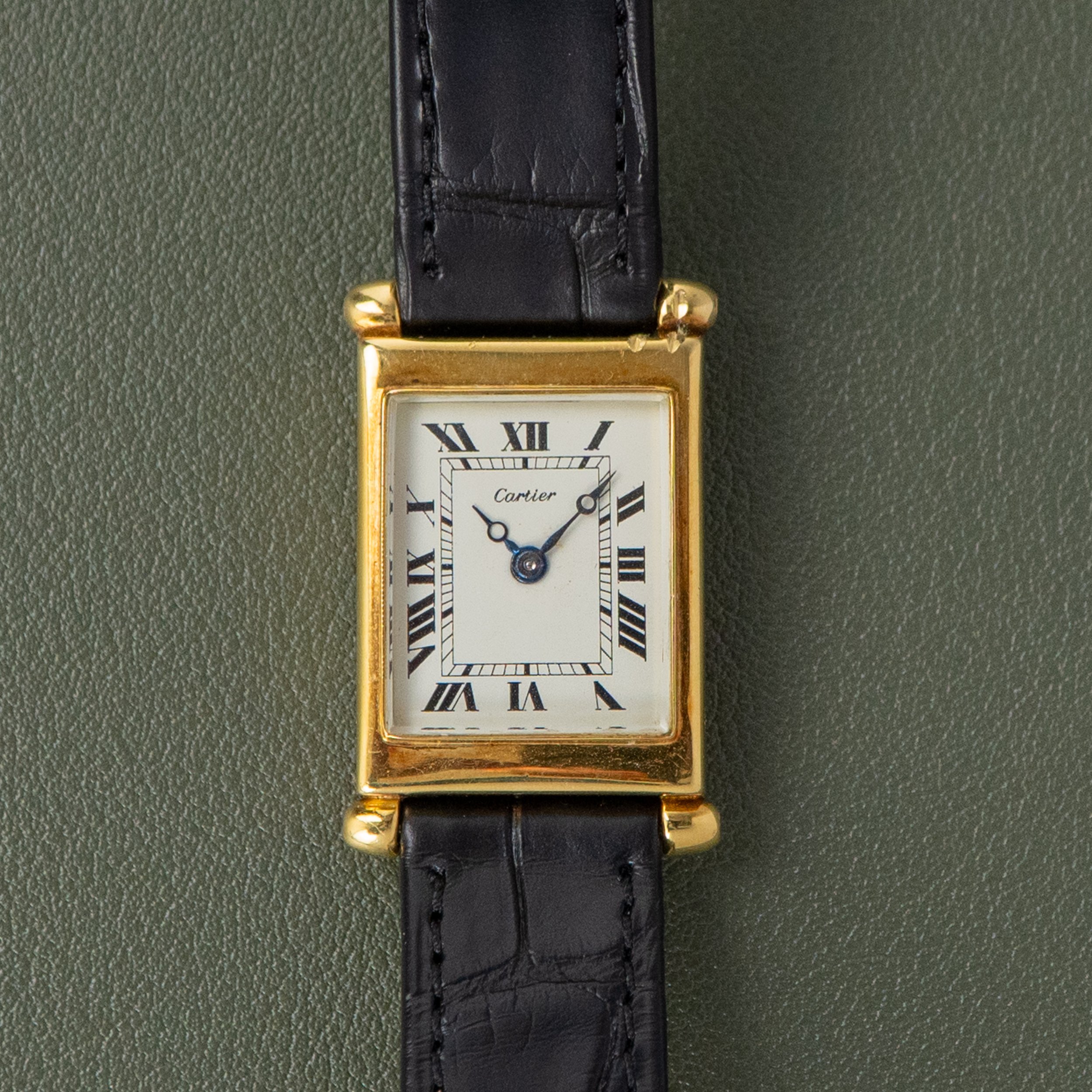
This example is, in my view, a circa 1940s Cartier Tank Obus in 18k yellow gold, and it is exactly the sort of early Cartier that deserves closer attention.
The Tank Obus takes its name from the French word for artillery shell, and the design is immediately recognisable by its rounded, projecting lugs. It is a simple idea, but a very effective one. The watch still feels elegant and architectural, but with a softness and sculptural quality that separates it from a standard Tank. That alone would make it interesting. But there is more going on here.
Firstly, the dial configuration is hugely appealing. The Roman numerals, chemin de fer minute track and blued Breguet hands are all details collectors naturally associate with early Cartier. It has the right visual language, and it feels true to the period.
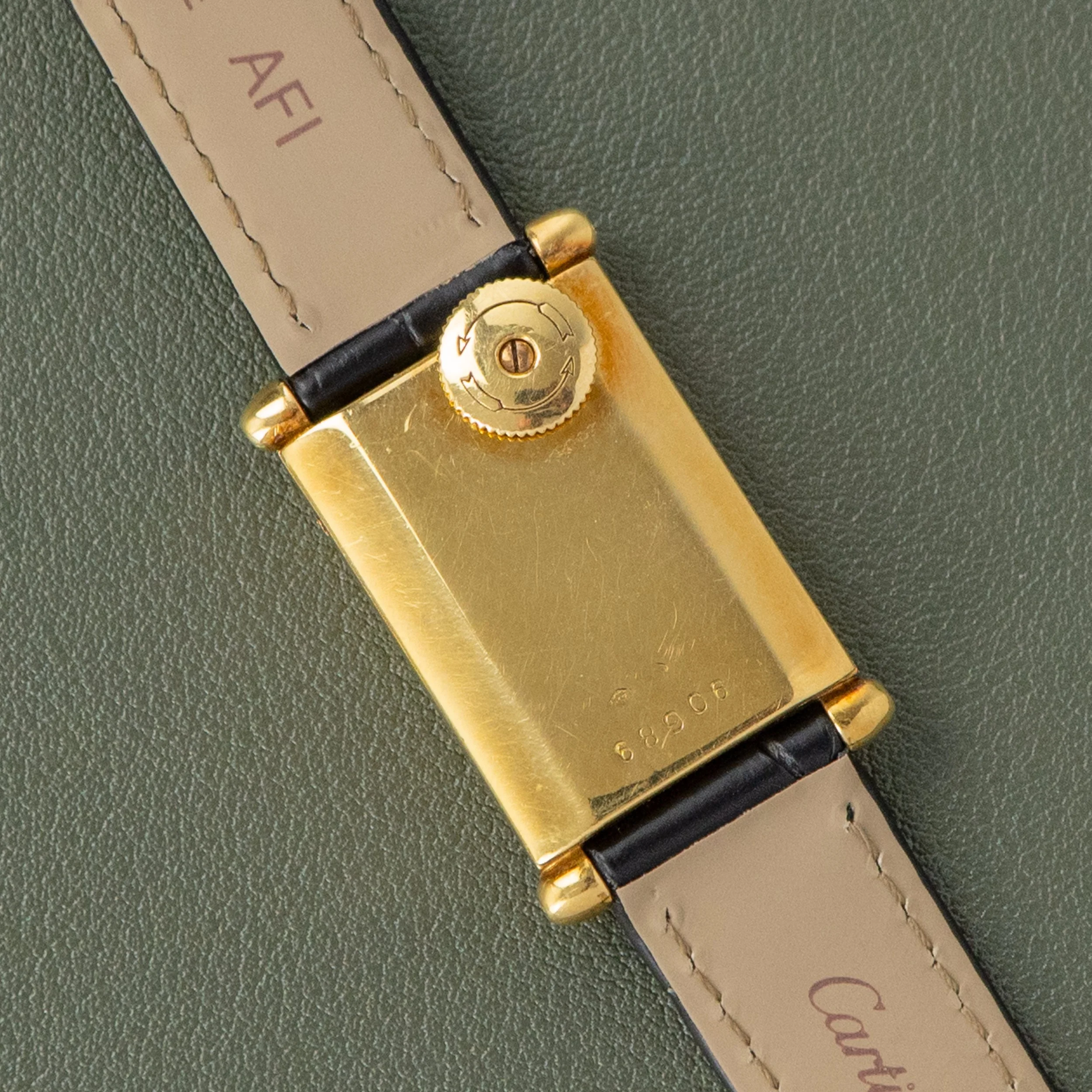
Secondly, and more unusually, this watch features a rear winding system. That is a detail that immediately elevates the watch from simply attractive to historically interesting. It changes the user interaction completely and gives the piece a more discreet, almost jewel like quality on the wrist.
Inside is an EWC calibre 409, another important point from a collector’s perspective. European Watch & Clock Co. played a key role in Cartier’s early watchmaking history, and the presence of an EWC movement gives the watch the sort of period correct mechanical substance that collectors want to see.
A Market Shift Worth Paying Attention To
I do not think collectors should buy watches simply because auction prices are rising. That is not the point. But the auction market can be useful because it highlights where collector attention is moving. And right now, it is very clear that Cartier is enjoying a serious reappraisal.
That does not mean every Cartier is suddenly worth a fortune. What it does mean is that important, unusual and design significant Cartier watches are increasingly being recognised for what they are.
And when that happens, pieces like this Tank Obus begin to make even more sense.
The vintage Cartier market has clearly moved. The auction results from Phillips, Sotheby’s and Christie’s over the last 12 months show that demand is stronger, broader and more serious than many people would have expected even two years ago.
For me, the real excitement lies not just in the headline grabbing results, but in the growing appreciation for pieces like this.
The Tank Obus is a wonderful example of early Cartier thinking. Elegant, unusual, design led and mechanically interesting in a way that rewards a closer look.
If the last year has shown anything, it is that collectors are beginning to reward exactly those qualities. And rightly so.